python 工具 字符串轉(zhuǎn)numpy浮點數(shù)組的實現(xiàn)
不同的數(shù)字之間使用 空格“ ”,“$”,'*'等隔開,支持帶小數(shù)點的字符串
NumArray=str2num(LineString,comment=’#’)
將字符串中的所有非Double類型的字符全部替換成空格
以’#’開頭直至行尾的內(nèi)容被清空
返回一維numpy.array數(shù)組
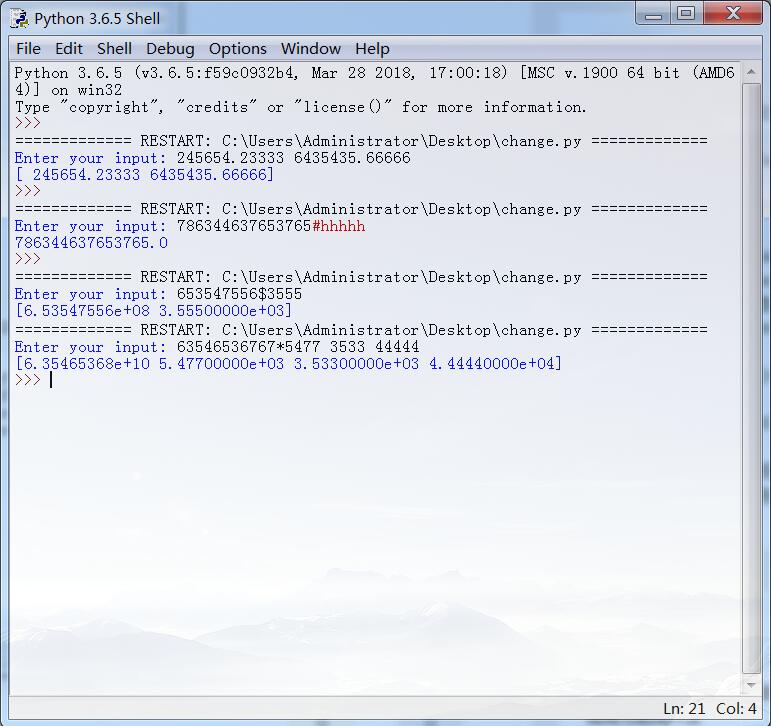
import numpyimport scipydef str2num(LineString,comment=’#’): from io import StringIO as StringIO import re,numpy NumArray=numpy.empty([0],numpy.int16) NumStr=LineString.strip() #~ ignore comment string for cmt in comment: CmtRe=cmt+’.*$’ NumStr=re.sub(CmtRe, ' ', NumStr.strip(), count=0, flags=re.IGNORECASE) #~ delete all non-number characters,replaced by blankspace. NumStr=re.sub(’[^0-9.e+-]’, ' ', NumStr, count=0, flags=re.IGNORECASE) #~ Remove incorrect combining-characters for double type. NumStr=re.sub(’[.e+-](?=s)’, ' ', NumStr.strip(), count=0, flags=re.IGNORECASE) NumStr=re.sub(’[.e+-](?=s)’, ' ', NumStr.strip(), count=0, flags=re.IGNORECASE) NumStr=re.sub(’[e+-]$’, ' ', NumStr.strip(), count=0, flags=re.IGNORECASE) NumStr=re.sub(’[e+-]$’, ' ', NumStr.strip(), count=0, flags=re.IGNORECASE) if len(NumStr.strip())>0: StrIOds=StringIO(NumStr.strip()) NumArray= numpy.genfromtxt(StrIOds) return NumArrayif __name__ == '__main__': str = input('Enter your input: '); donser=str2num(str) print(donser)
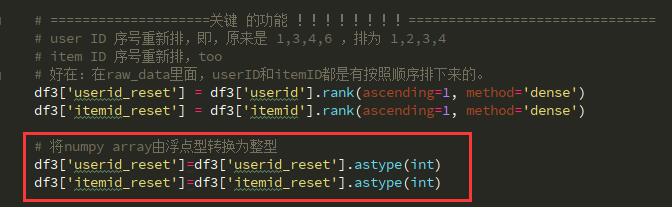
補充知識:Python 將numpy array由浮點型轉(zhuǎn)換為整型
——使用numpy中的astype()方法可以實現(xiàn),如:
以上這篇python 工具 字符串轉(zhuǎn)numpy浮點數(shù)組的實現(xiàn)就是小編分享給大家的全部內(nèi)容了,希望能給大家一個參考,也希望大家多多支持好吧啦網(wǎng)。
相關(guān)文章:
1. 使用 kind 和 Docker 啟動本地的 Kubernetes環(huán)境2. jsp中sitemesh修改tagRule技術(shù)分享3. Docker究竟是什么 為什么這么流行 它的優(yōu)點和缺陷有哪些?4. docker容器調(diào)用yum報錯的解決辦法5. IntelliJ IDEA導(dǎo)出項目的方法6. Django中如何使用Channels功能7. idea設(shè)置代碼格式化的方法步驟8. python的json包位置及用法總結(jié)9. Python通過zookeeper實現(xiàn)分布式服務(wù)代碼解析10. 關(guān)于html嵌入xml數(shù)據(jù)島如何穿過樹形結(jié)構(gòu)關(guān)系的問題
 網(wǎng)公網(wǎng)安備